

I remember quite clearly my first workshop with permaculture gardener and urban forager, Tania Schellenberg. As we walked to a local permaculture garden, Tania would casually pick leaves off various plants — that at the time undoubtedly looked all the same to me — and would eat them, telling us, in the meantime, what these plants were, how they tasted, and inviting us to give them a try. At that moment, I was in awe of this quiet power: the ability to look at your surroundings, wherever you might be, and know that you could find something to eat.
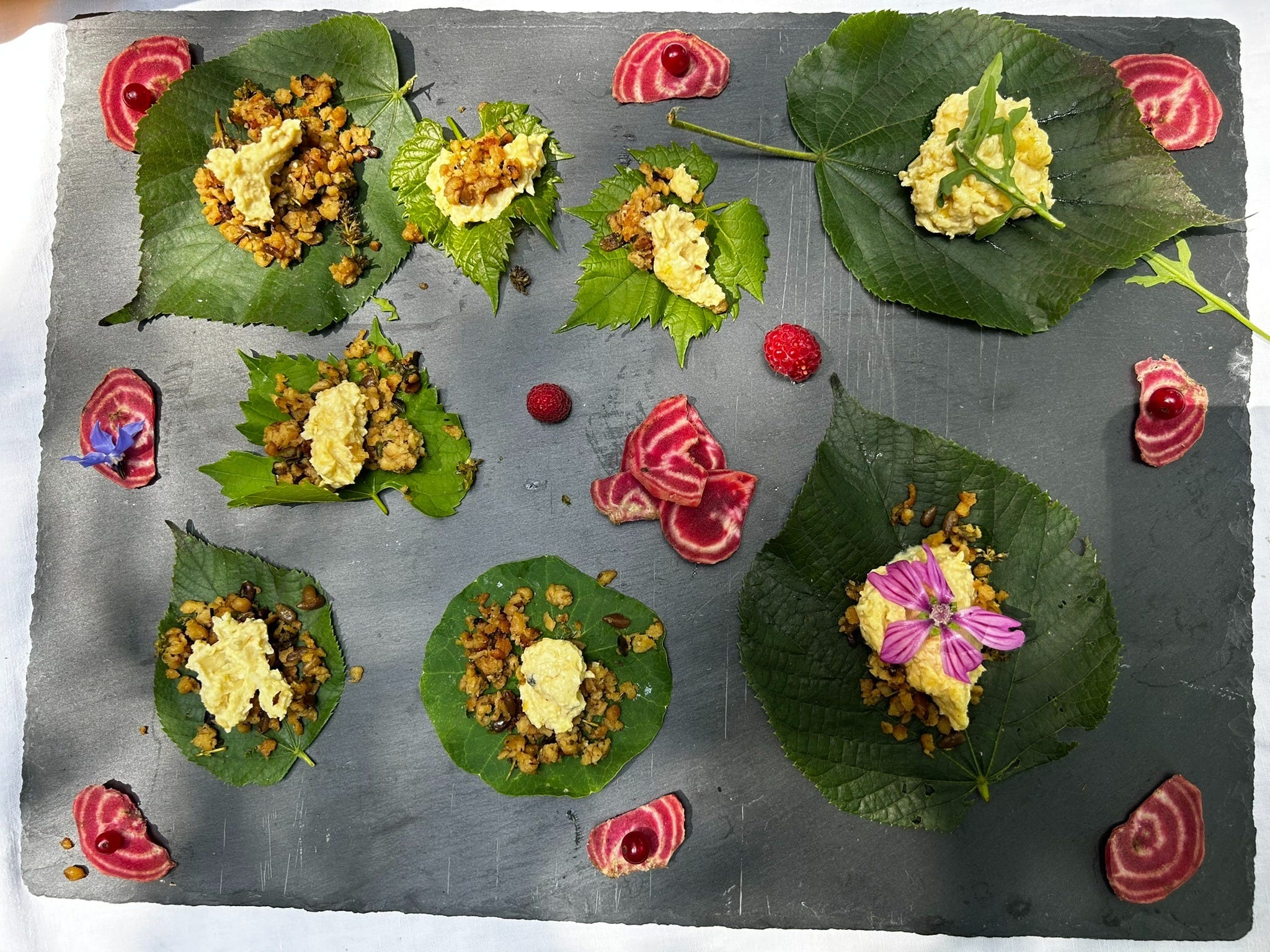
Urban foraging in action
Today, many Europeans are living in cities, away from the forests and meadows where our ancestors would have traditionally foraged. In many cities, however, foraging is still possible, and many urbanites already practice it. A study in Vienna, Austria found that 64 percent of the almost 500 residents surveyed had already foraged around their city’s public parks, although those that took the foraging leap in general already had a strong existing relationship to nature.
The leap is worth taking, as studies have shown that the well-known benefits of increasing access to nature in cities — such as a decrease in stress levels; an increase in social cohesion and physical activity; improved health, well-being and higher reported levels of happiness – are compounded when residents have an active and meaningful sensorial and emotional relationship with nature. Foraging can facilitate this relationship.
As well as urban foraging, another popular intervention has been engaging urban dwellers in food production through neighbourhood farming projects. This is, however, time and labour intensive. Urban foraging, researchers suggest, is an underexplored way to get city dwellers to meaningfully engage with nature. Its spontaneous, sporadic and easily accessible nature is less time and labour intensive than farming, if just as knowledge intensive, and studies have shown that it seems to appeal to a wide variety of urbanites, regardless of their sex, age, education, income or cultural and ethnic backgrounds. Since the pandemic, it has also grown as a way of exploring one’s own city in a deeper way.
Several European cities are taking steps to make urban food foraging more accessible. The city of Vienna is collaborating with the non-profit ObstStadtWien, in order to maintain 300 publicly accessible fruit trees, and Andernach in Germany has been developing their edible city project since 2010. Meanwhile, the ARBRES project in Brussels is organising crowd-funded campaigns to plant fruit trees and edible shrubs throughout the city in an effort to green the city as a climate change mitigation measure, while making it more edible for residents.
Tania teaches foraging from the heart of Zurich, where she guides people to see and use the plants around them: “I often ask in the workshop, how many plants do you know? Do some people know two plants?” to which most people respond positively. Her response, encouraging her participants to engage even further with their surroundings, was to “double their number.”
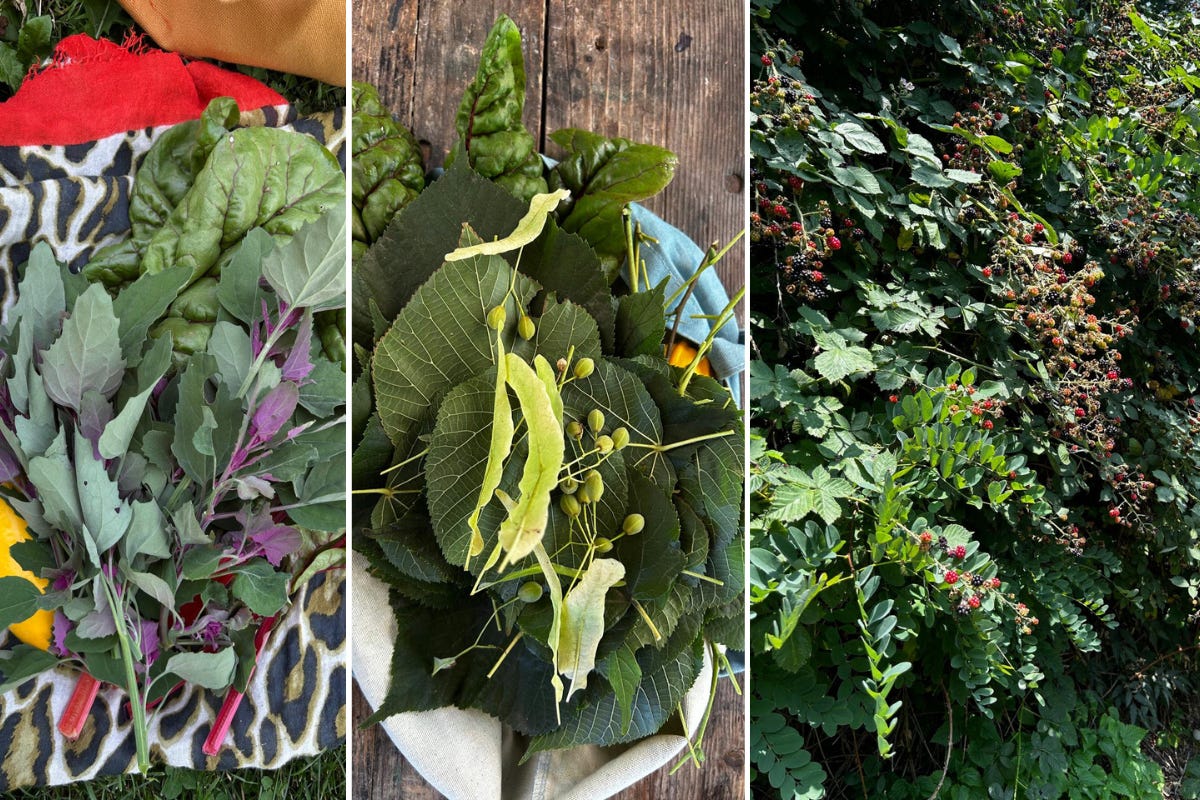
Foraging safely
Nonetheless, when researchers asked people what was stopping them from foraging, one chief concern expressed was safety. Tania has experienced this herself in her workshops, sharing with me that a participant from a workshop in Basel, Switzerland felt this sense of insecurity, asking “but can I buy this?” to which she responded, “why do you buy it if it’s for free?” It might, then, be a case of unlearning certain safety concerns, whilst also keeping in mind that “people have the right to be cautious and to find their own way, and there are risks”, concludes Tania.
Starting off with a class taught by an experienced herbalist is Tania’s, as well as Lisa Raimund’s — a Swiss herbalist and wild plant forager — number one tip. For city foragers, Lisa also suggests that “it’s always easier to forage for plants that maybe don’t necessarily touch ground [due to potential contamination by passing animals] such as linden or also birch trees or pine trees. You can pick the pine buds or the fresh pine needles in spring.”
In cities, foragers need to know both which plants are safe to pick, and which spots are clean enough. Sivajanani Sivarajah, an urban forest scientist, found that wild plants could have high heavy metal concentrations in urban areas when located close to traffic. This concentration drops, however, the further you move away from heavily polluted areas. The ARBRES project in Brussels, meanwhile, found that fruits from urban trees were not more polluted than what is currently sold in stores.
A guided tour would answer all safety questions for budding herbalists. “What I love is that by the end of the class people are really inspired and feel confident just trying it out,” Lisa says, “at least three times this year, I have heard after one of my classes that people then feel confident to make their own pesto.”
In some cases, foraging might even have some commercial potential. Gartengold, a social enterprise founded in 2013 in St. Gallen, Switzerland, employs local workers with disabilities to rescue unpicked apples from private gardens and meadows that until that point had been left to rot on the ground. The company would then transform these apples into apple juice, or the beloved Apfelschorle — a staple Swiss drink made from a mix of apple juice and sparkling water — to be sold directly to consumers.
Smart foraging
Studies have shown that designing cities with sustainability in mind could even create spaces where urban foraging would have the potential to start meeting significant needs. For example, in Burlington, Vermont USA, where researchers found that the entire population could meet their daily requirements of fruit if a significant part of the city’s green spaces were planted with fruit trees. This has, according to the authors, “substantial potential to contribute to food security.”
This idea reminded of one of Tania’s practices, what she calls “smart foraging” — the idea that “every time you see something, you plant it on your balcony or around your house, so that next time it’s a little easier to access.” In this way, the line between farming and foraging starts to blur, especially in urban areas, and step by step, cities have the potential to move towards an interesting food systems solution: edible cities. An edible city turns public space — verges, parks, castle moats — into harvestable landscape.
Sometimes, creating change through governmental-led action is too slow, inspiring grassroots action by residents. In Zurich, perhaps the most famous example of this is led by flower-graffiti artist, Maurice Maggi. Known as ‘Zurich’s first guerilla gardener‘, Maurice is mostly known for his seeding of 50 different native plant species around Zurich, all edible or medicinal. He is also known for his seasonal tavolatas, where he would cook a vegetarian feast with many foraged ingredients from around the city of Zurich. His most successful recipes can be found in his book, Essbare Stadt — translating to “Edible City”.
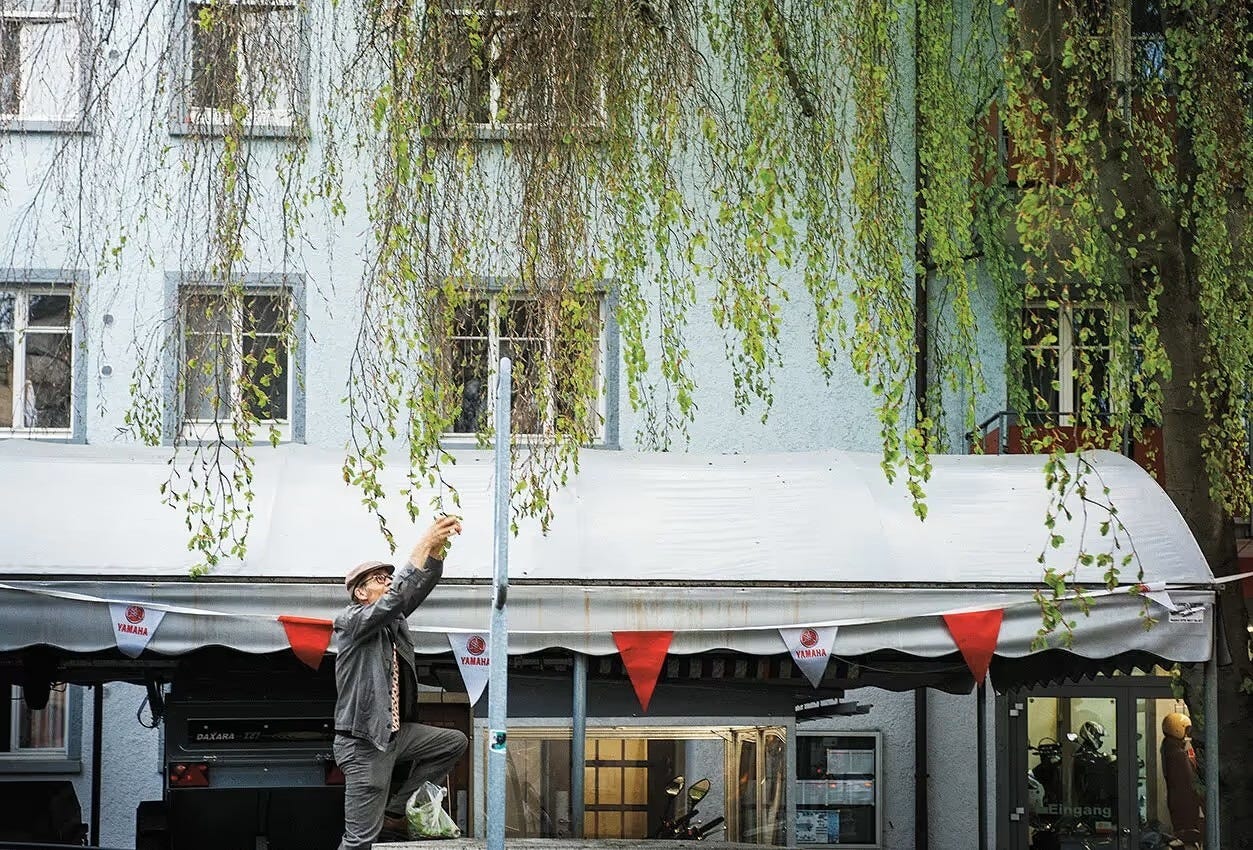
First steps in urban foraging
Classes are always recommended as a first step for absolute beginners — if you’re around Zurich, follow Tania or check out Detours Zurich. There are several platforms that make urban foraging accessible by mapping out edible places. Falling Fruit is a community-driven platform, created to share locations of where to find edible plants and other sources of free food; while Mundraub maps freely available eatables in public spaces and on private land subject to the owner’s permission. If you read German, I recommend Essbare Stadt by Maurice Maggi. If you read French, I can highly recommend Laetitia Roux’s Sauvages des Villes, which classifies plants in three levels of difficulty based on how easy (or not) they are to identify — it can be a fun project to work through her book. For some free recipes on using what you forage, check out pages 61 and 64 of the Food and Agriculture Organization’s free foraging guide, featuring some of my favorite foraged nutrition bombs: dandelion and nettle.
This essay was generously edited by Lorina Varga.