

It’s the year 2080. Quinn, a 21-year old food science student, has just received an assignment from her food history class to analyze old recipes from her French ancestry. Excited, she calls up her millennial French grandma about meeting up to go through old cookbooks and reminisce about the past. But once Quinn starts leafing through the cookbooks, the recipes shock her. Just 55 years ago, when climate change was already ravaging the world — and the driving role of industrial agriculture and livestock production were already well-established facts — most meals still contained animal-based products.
Cured pork meats were usually served as apéritif, her grandmother explains, and the only fiber on the menu is the starter salad. The main course was beef, followed by a cheese course, all rounded off with a dairy-packed crème brûlée for dessert. Quinn, who now lives in a world with endless droughts, heatwaves and destructive weather events, where the effects of runaway climate change continue to threaten the world’s food supply, is alarmed to see that there was no question about eating meat in 2025. And that her own grandmother, who would have been 31 at the time and fully capable of making her own food choices, still chose to cook these meals. She looks at her grandmother’s proud face and briefly thinks about saying something, but decides against it. Quinn nods politely and takes the material she needs for her report. On the way back home, angry tears burst out of her. Quinn will never even be able to taste the delicious wine her grandmother raved about because it’s now too hot for those grape varieties to be cultivated. Quinn feels cheated — of her culture, of her ancestry and, in many ways, of her life. The sheer cruelty — to people, planet and non-human beings — that was unfolding every single day, is too much to bear. They knew, and did nothing?
By now, if you’ve been following my Protein series, you should know full well the problems with our obsession with protein. We’ve learned that protein is not lacking in our diets, especially in more developed countries. On top of that, eating too much protein, particularly from animal sources, is generally harmful to our own health as well as the planet’s. We’ve learned that lab-grown meat may solve some of the ethical and environmental concerns of conventionally grown meat, but that it’s still much more resource-intensive than plant-based proteins. To boot, such high-tech solutions may further alienate us from our food production systems and place our continued survival in the hands of for-profit companies. And in many cases they might not even be necessary, as many low-tech solutions already exist today that can help us realign human health with planetary health. Rather than looking to the future for a silver-bullet technology, we already have the tools we need to put humanity on the path to greater health and long-term sustainability, while allowing us to still enjoy delicious foods and maintain culinary relationships with our respective cultures. To that end, I’m sharing my top five solutions we can enact today to improve Quinn’s future prospects, and ultimately be remembered as responsible and ethical stewards of human and planetary health.
Fiber, fiber, fiber
One wild thing about the current protein craze — beyond the fact that it’s simply unnecessary for anyone in the developed world to worry about getting enough protein — is that it neglects a key macronutrient we actually are deficient in: fiber. What’s more, eating more fiber can help us reduce agriculture’s environmental impact by reducing the demand for meat, alongside many other environmental benefits.
Fibre is a kind of plant-based carbohydrate that the body can’t fully digest, but it is a feast for our gut bacteria that play critical roles in our digestion, general gut function, and overall health. Gut microbes have been trending in science lately — and for good reason; the health of almost every bodily system has been linked to it, and fiber deficiencies have been linked to skyrocketing cancer rates. That’s why fiber is increasingly being recognized as a macronutrient — a type of food required in large amounts in the diet — in its own right
I’m not here to peddle scammy fibre supplements, which are in most cases unnecessary. All we need to keep our gut bacteria healthy, experts say, is to make sure to get 10 portions of fruit and vegetables a day, and aim for 30 different plant species in our diet per week. This ensures we get diverse enough “prebiotics” — food for our gut bacteria — to maintain a healthy body; with gut bacteria, it’s always the diversity of prebiotics that matters.
A diverse diet, in turn, has a positive effect on our planet. Today’s food systems suffer from what experts have called a “triple monotony”, where we’re relying on very few species of plants and animals to feed ourselves. That not only leads to poorer nutrition and health, but also less diversity among the crops we cultivate as well as an increased risk of plant diseases wiping out entire harvests. That’s because pests tend to attack one type of plant that is particularly good at hosting them, so widespread monocultures make our food supply incredibly vulnerable to plant pathogens wiping out entire fields (this has already happened with the gros michel banana in 1965, which you’ve probably never tasted.)
Today, globally. over 60% of our calories come from just three crops, and most people don’t really eat more than 12 different plants — a far cry from the 30 plant minimum. By shifting our dietary behaviors to align with scientific recommendations and correct our fiber deficiency, we’re not only making a huge step for our health; we’re also signalling to food producers that we want more diversity from our food systems. Each of us has the power to drive that change by simply choosing a diverse array of plant products from our local supermarket.
Reconnecting to our food systems
Today, in many developed countries, consumers likely don’t spend a lot of time worrying about where their next meal is coming from. Most will shop in supermarkets, order take-out or go to their local restaurant. As we’re so disconnected from our food systems, most of us are unaware of the problems they contain: the fact that intensive agriculture models are not compatible with planetary health and that they produce food that’s often less nutritious than smaller scale agriculture. In developed countries, over 50% of our calories come from ultra-processed foods, which are sold pre-packaged and ready to eat by for-profit companies, who only worry about their bottom line. Being so alienated from our food systems means that we continue to perpetuate the ills of the status quo while simultaneously endangering our continued access to food and giving away the control of what is available, and where it is from.
“Food Sovereignty is the right of peoples to healthy and culturally appropriate food produced through ecologically sound and sustainable methods, and their right to define their own food and agriculture systems.” - Via Campesina, an international not-for-profit movement based in Belgium defending food sovereignty.
There are many ways to reconnect to our food systems. If time allows, gardening and farmers’ markets are a wonderful way. But, while great, these are limited and elitist solutions, as they often require a wealth of both time and money. The US has seen a burst of people turning to urban gardening movements as a way of getting fresh produce in food deserts devoid of healthy groceries. In Europe, some groups are beginning to plant produce in vacant lots in urban areas. And more people are subscribing to programs where they pay a certain amount of money to farmers at the start of the season in exchange for produce or boxes full of “wonky veg” that do not pass arbitrary aesthetic standards by supermarkets.
There are other solutions afoot. The emerging agrihood movement blends agriculture, real-estate and community building and is a promising re-think of how we live. In the US, for instance, communities are building new kinds of living spaces that integrate farming areas, green spaces, and community kitchens. Residents are involved in each and every step of food making, while agricultural areas, food forests, and orchards double as places for community gathering. While certainly complex and expensive to put into place, solutions like these solve multiple problems at once — loss of food sovereignty, biodiversity collapse, and the social disconnection we’re all increasingly suffering from.
Making better use of food waste
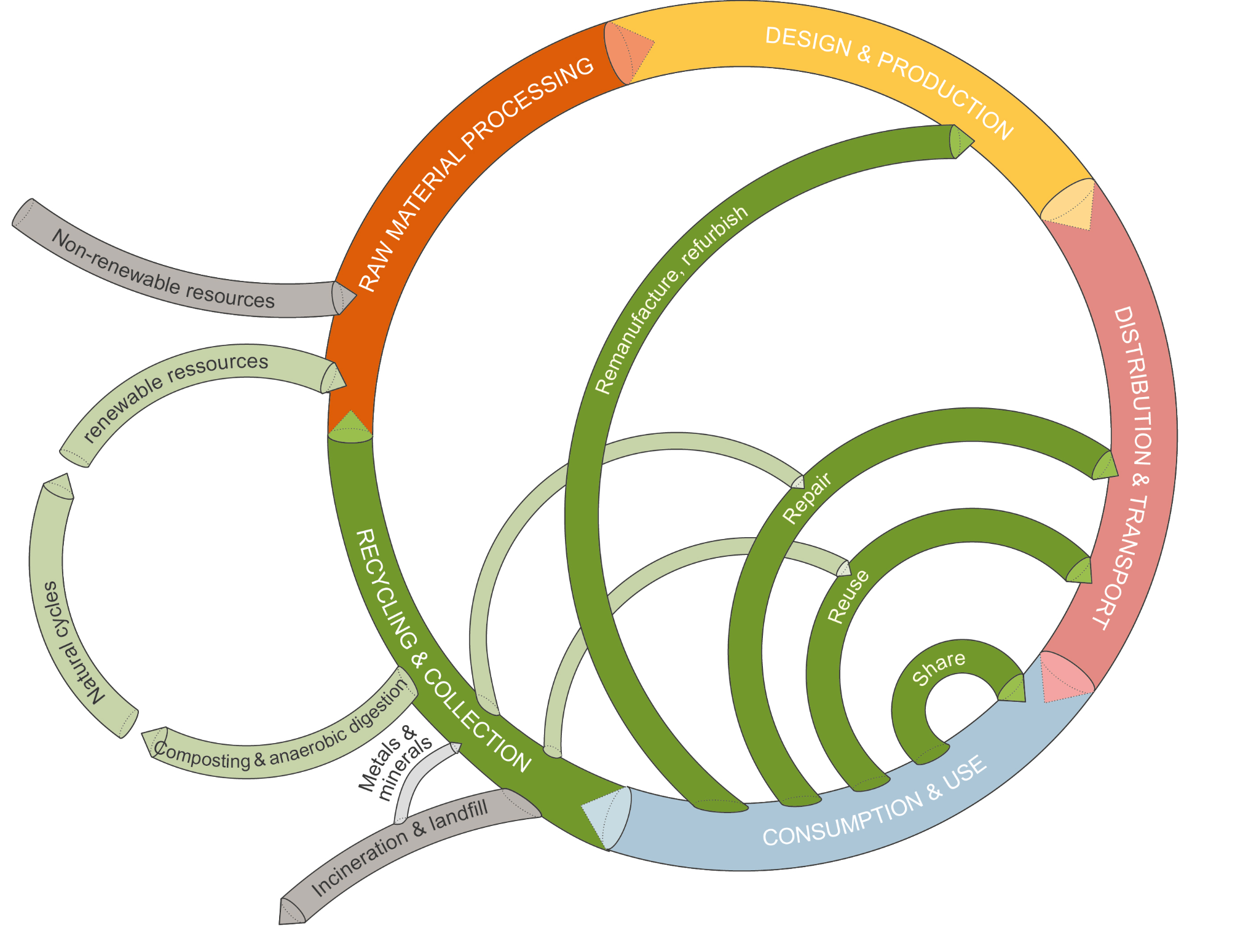
The concept of a “circular economy” — where all resources are recycled and re-used — is a big contrast to our current economic model, where most things end up in the landfill. Several innovative start-ups have begun to explore ways of avoiding that outcome for unwanted food. Some, for instance, are making use of so-called “side-streams” from food production that are usually thrown away by upcycling them into valuable products. For example, the Zurich-based company Kuori creates a bioplastic from walnut shells and olive pits.
Meanwhile, the Bern-based start-up Luya is combining okara, a side-stream of tofu production, with chickpeas to make high protein nuggets. One portion even contains up to 30% of your daily fiber requirements — now we’re talking! Luya’s products, which I actually personally love and have integrated into my weekly protein rotation, hits all the right spots when it comes to FoodTech: meeting a real nutritional and climate need, combining protein needs with fiber, and being delicious and versatile to use. I like to bake them for 15 minutes at 180°C, lightly drizzled with olive oil to get them a little puffy, and then add a soya-cream and mushroom sauce.
A shift in staple crops
Rising temperatures, droughts and floods, and a widespread increase in pests do not bode well for the future of food production under current conditions. While predictions vary, one 2020 EU report predicts that, by 2050, wheat yields in southern Europe will decrease by up to 49% and maize production may decrease by up to 20%. One way to counteract this is to tweak our agricultural practices, both in how and when we sow and harvest but also through practices like agroecology.
Another solution is to diversify the plants we eat, relying on a wider variety of crops that are resilient to different challenges that climate change brings. This solves our current triple-monotomy issue: increasing the biodiversity in our fields makes our crops more resilient to pests and climate swings, while boosting the biodiversity on our plate makes for a healthier human.
The common financial advice to “diversify your assets” certainly applies here too. Research efforts like WWF’s and Knorr’s joint “Future 50 Foods” project highlight which crops may come into question from an agricultural, gastronomical and nutritional lens. Some delicious future foods include traditional species of grain like fonio (high in magnesium — another common deficiency) as well as algae (high in iodine). Mushrooms like enoki and maitake are also on the list, which could be cultivated locally in Europe; both are delicious and with medicinal properties.
The humble legume to the rescue
As a technophilic culture, we tend to believe we can simply innovate our way out of our issues with silver-bullet solutions. Such solutions give us the comforting illusion that we can simply continue to live as we do; perhaps some hyper-intelligent AI will save us from ourselves. But technological innovations — like cultivated meat, which we’ve discussed — always carry trade-offs.
While I’m not advocating going back to a pre-modern lifestyle, we must recognize the promise of low-tech solutions, which are usually cheaper and easier to implement. They’re often also sustainable and resilient, as they don’t rely on fancy equipment, complex supply chains or ultra-specialized talent. Unfortunately, this means we can and should change our behaviors and lifestyles now, which is uncomfortable. The reality is that we already have an exquisitely engineered solution to the protein predicament — one that has been field- and tast-tested for thousands of years: the humble legume, along with the cultural knowledge of how to cultivate and consume it.
Beans and lentils boost soil health — and therefore the success of other crops — as they host nitrogen-fixing bacteria in their roots, a nutrient that other plants need. This makes them an excellent plant to include in the crop rotation of agricultural fields, as part of a grouping of crops to simultaneously support other plants directly, or as a way to rehabilitate and restore impoverished soil. From a human health perspective, they are packed with fiber and protein, and there are endless ways to dress them up gastronomically: from making plant-based ricotta, tofu, veggie balls, stuffing, or stews and salads. Legumes are foundational to Mediterranean cuisine, one of the healthiest on the planet — and for good reason: they are cheap, abundant and healthy, allowing poor farming communities in particular to enjoy excellent nutrition.
That's something that people in 2080 — like Quinn — will hopefully understand well.
After the disastrous visit with her grandmother, Quinn takes her mind off things at her weekly university potluck. She picks up some fruit and vegetables— and importantly, beans — from her local agrihood for free, and waltzes into the Foodie Club’s meeting place: a beautiful structure made of trees and natural heat-dispersing materials. She begins to make a French inspired dish: a canellini bean, mushroom and seitan bourguignon, plant-based of course — Quinn is an athlete and takes care of her body. Lab-grown meats are anyway too expensive and most people have lost interest in them, having long forgotten the taste and desire for meat.
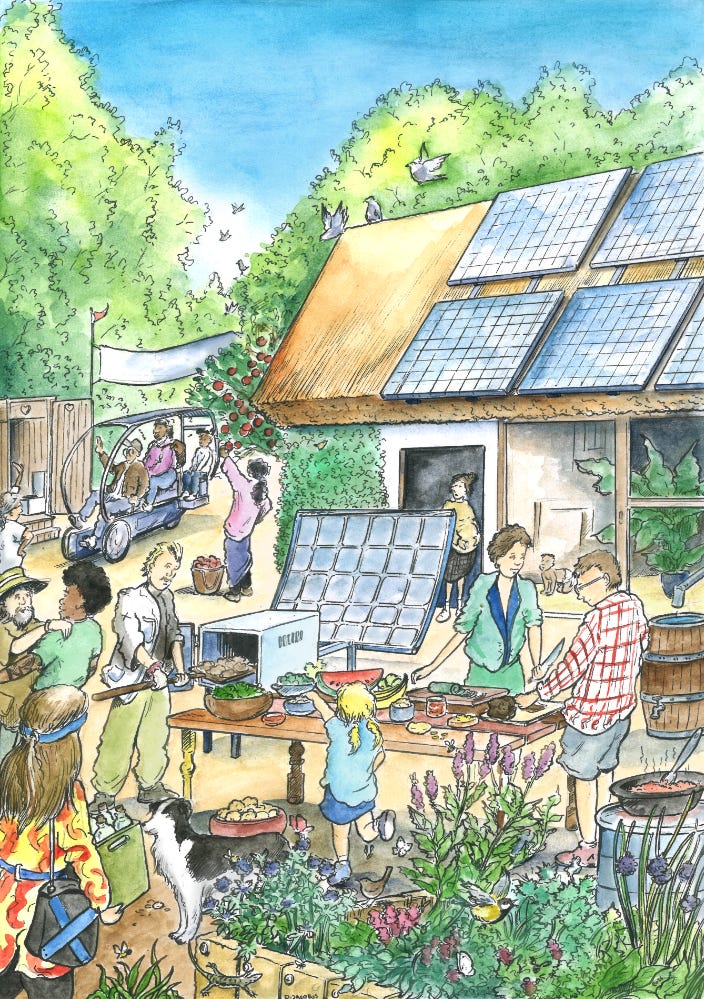
As Quinn approaches the table, the colorful dishes make her stomach grumble: a three grain dish with triticale, millet and buckwheat which makes a delicious base for the pot-luck’s signature three-bean stew of chickpeas, broad beans and yellow peas. A root veggie and walnut salad drenched in a sweet fig vinaigrette is the perfect side dish, along with some stir-fried catalogna and pok-choi. Quinn spots her friend's signature marinated tofu and okara nuggets, one stewed and another air-fried to a crisp. She piles the latter on top of her food mountain before sitting down next to her friend. She eyes the piles of fruit for dessert — both fresh and in various cakes. Quinn waits for everyone to finish getting their food — starting to eat together is a ritual they share every Sunday and it would be unthinkable to start eating before everyone had sat down.
“You’ll never guess what I found out today at my grandma’s” she throws out to the table. “We were looking through old photos and recipes, and — I couldn’t believe it — they were eating meat from slaughtered animals at every meal, flying tropical fruit around the world without a care in the world!” After pausing briefly, she speaks in a hushed tone: “I love my grandma, but I can’t possibly look at her the same ever again. She’s the reason things are so messed up now.”
Quinn lets her comment go unanswered, believing no one has heard her. At the end of the dinner, an elder takes her aside.
“You know, it touched me what you said earlier,” he paused, “I get how hurt you feel, but you should forgive your grandma. I mean, she doesn’t eat meat anymore right?”
“I guess she did teach me the bourguignon recipe I made, and many others,” Quinn replied. “She did say that when the second big pandemic came around, Covid-29, things started to change and they raised the price of meat and subsidized plant products. She spent that entire lockdown veganising all her family recipes, to make sure that her grandchildren could still taste our family history.”
“But,” Quinn says after a pause, “if they had acted sooner, faster, we wouldn’t be here today.”
“That’s true,” the elder replies. “But hindsight is always 20/20.” He pauses again slightly, “you know, I sometimes think about our own blindspots. What will your granddaughter be mad at you for in 50 years? And if we could figure that out, wouldn’t we have a chance at being better ancestors than the ones before us? Shouldn’t that guide how we behave today?”