

Food is not just about money, sustainability or health. Arguably, culture and pleasure are more important factors when choosing what to eat. Food is what communities gather around. It’ss how we show hospitality and love and how we share each other’s cultures. Pleasure is just as important. Eating food we like activates a whole host of neural pathways that make us feel good, as exemplified by the beloved phrase “comfort food”. This association we all have between food, pleasure, home, family, and comfort dates back to early childhood1. A lot of these memories are linked to meat-based dishes, for those who have grown up in countries regularly consuming animal products. No wonder there is widespread resistance to giving up meat entirely.
In the first article of this protein series, I discussed the cultural hype around protein, and why—unfortunately—eating too much of it is not great for our own bodies or the health of our home planet. That said, everyone completely giving up meat is unlikely to happen because of our strong cultural ties to it. Human ingenuity to the rescue, alternative protein companies are popping up around the world, proposing a solution to this dilemma: real meat and meat-like products made in an ethical way that don’t harm the planet. These include plant-based mock meats but also cultivated meat, where meat is produced in the lab from a biopsy taken from a live animal. But it’s worth asking if these new products really are a panacea for our protein problems. In this article, I explore the promise of alternative proteins as well as the challenges in ensuring they’re truly sustainable and what they could mean for our relationship with food. I think they will ultimately find a place in our future diets—but only alongside other, broader improvements to our food system.
Proteinaholics—why we are not giving up meat
The case for developing alternative proteins is clear. The switch to more plant-based lifestyles is not only held back by deep-seated cultural ties to meat, but also the gender we identify with. Men in general tend to be more attached to meat than women;a whopping 76% of vegans are women. This may be because of differences in gender socialisation: studies show that we associate eating meat with manliness, while eating vegetables is considered a more feminine diet choice2. These deep-seated cultural and emotional reasons for meat consumption should not be underestimated. If we try to get people to shift to plant-based diets without addressing these ties, we are doomed to fail.
“Sustainability also has to be sustainable for us,” says Laura Sommer, an expert in food systems who works for the Swiss government. If going on a plant-based diet means forgoing comfort recipes or family classics, it makes sense that you might eventually switch back to meat. In fact, various studies report that between 30% and 80% of vegans and vegetarians eventually reintroduce meat into their diets3–5.
This is where new sources of protein come in. Aleksandra Treichel, an analyst in her 30’s living in the greater Zürich area who has been vegan for several years, says she enjoys cooking with plant-based meat (meat substitutes made entirely from plant-sourced proteins and fats): “Plant-based meats can be an inspiration, and sometimes a lazy food choice after a long day. It also makes it easier to convince people that I am serving a full meal when I am cooking for non-vegan friends,” she says. Alternative protein sources like these could allow us to have the best of all worlds: cultural classics made in ways that avoid harm to animals or our bodies.
However, plant-based meats alone may not be enough to persuade regular meat eaters. One of the limitations is taste; current technology cannot quite replicate the rich, indulgent taste of animal fat. Some innovators are tackling this problem by combining plant-based protein with animal fat6, while others, like the San Francisco-based company Lypid are attempting to create plant-based fats that replicate the properties of animal fat7.
Perhaps a more important consideration is the target demographic of plant-based meats. Ultimately, “I think these products still belong to the vegan world, to the people who already do not eat meat,” Treichel says. Alexander Morel, head of bioprocessing at MIRAI International, a company leading the Swiss market in developing cultivated meat, agrees. “The people who switch to plant based meats are the people who already know there is a problem, and who are willing to change,” he says. Meanwhile, his company promises to produce real meat, without the ethical or sustainability issues that traditional meat has - and in doing so, targeting a different demographic. “The goal for us is to change the people who love meat, the ones who are not willing to make the switch to plant based alternative proteins,” Morel says. “At MIRAI, we want to target meat lovers”.
Cultivated-meat—a how-to guide.
To learn more about how cultivated meat is made—and its potential place on our dinner plates—I visited MIRAI international, which is based just outside of Zürich.
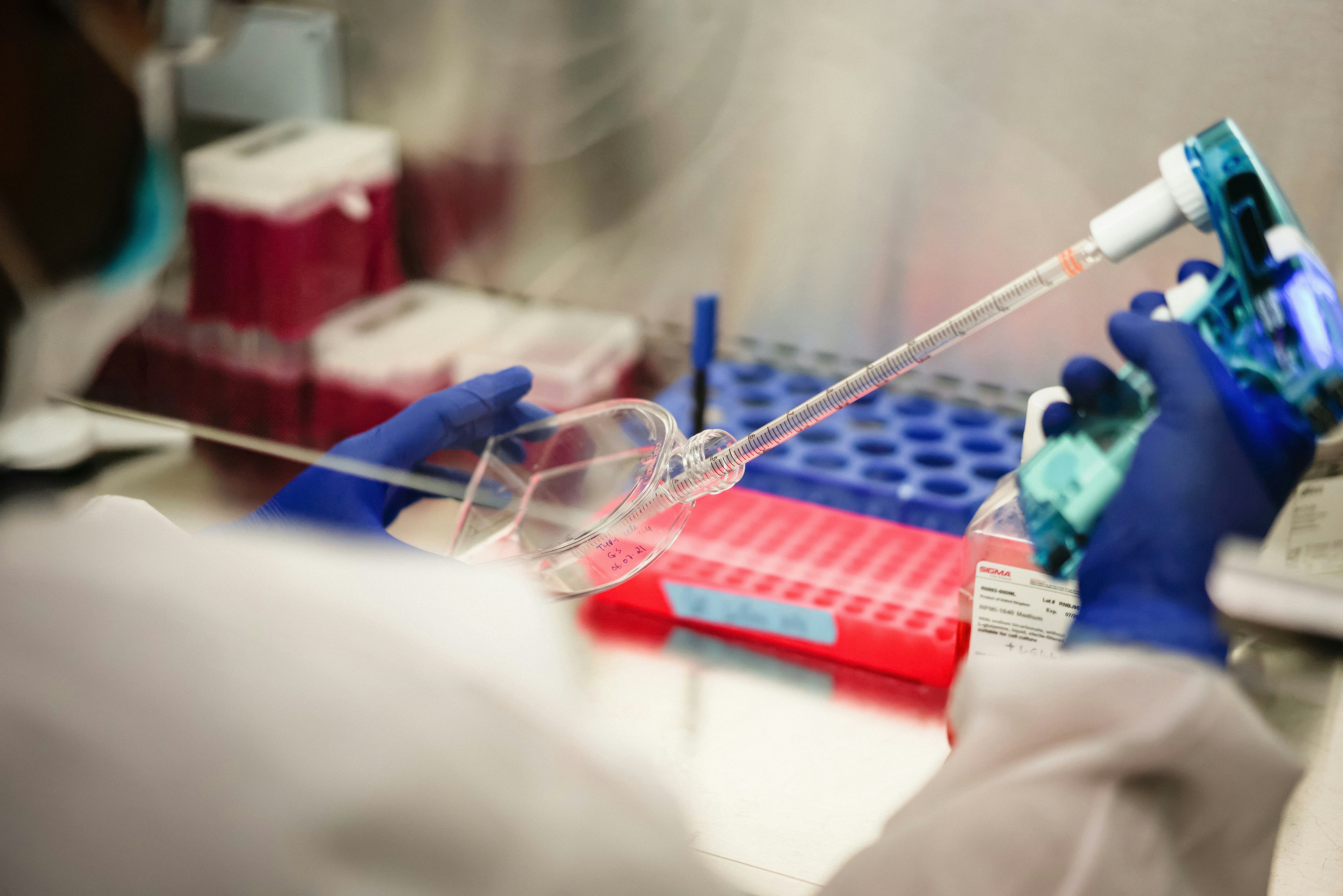
To build meat, you need to make the right building blocks, which are essentially muscle and fat. The process starts by taking a small biopsy from a cow, which contains both, and using them to grow steaks in the lab. At MIRAI International, “we use the most natural methods possible,” Morel says. That means no genetic modification of the cells used, and conditions are precisely monitored to keep the cells alive. MIRAI bioengineers have optimised the system so the cells undergo 50 rounds of cell divisions, “so from 1 biopsy with 50 doublings, we can make 2000 tons of meat,” Morel says. The end product, nutritionally speaking, is very similar to regular meat. The cultivated muscle cells contain similar types of protein and micronutrients as real meat. And, the cultivated fat can be optimized to have more of the healthy kinds of fats - so-called “unsaturated” ones which could make the resulting cut of meat healthier for us to eat.
While MIRAI is working on replicating the taste and texture of popular modern meats, others are striving to bring back tastes from the distant past. For example, Vow Food, an Australian food company, makes meatballs made from woolly mammoth meat, an animal that has been extinct for 5000 years.
Cultivated Meat for a Better Tomorrow
But some experts aren’t sure how quickly we’ll actually see these newer kinds of meats on grocery store shelves. That includes Björn Witte, the CEO of BlueHorizon, an investment firm with the mission of accelerating the transition to sustainable food systems. He told Foodaktuell that he does not think fully cultivated meat will hit the market in the next eight years. But we can at least expect to see some so-called hybrid meat products8, which are a blend of plant-based and lab-grown animal ingredients, he added. If you’re in a hurry to try, head to Singapore, where you can already taste hybrid chicken nuggets from the local company Good Meat. These consist of up to 75% cultivated meat, and the remainder are plant-based ingredients,10.
Other experts are even more skeptical, and doubt that it will ever be possible to produce cultured meat at scale11. Despite this, the appetite for cultured meat technology is ravenous, with a plethora of new cultured meat start-ups opening every year. Mosa Meat, based in the Netherlands and one of the pioneering companies in this field, successfully closed a crowdfunding campaign that raised almost 4 million euros, after raising more than 160 million euros from more traditional funding sources. In a recent article, the company’s CEO Marteen Bosch expressed excitement about the investments. The crowdfunding campaign is, at time of writing, at over 230% of its initial goal, demonstrating how supportive people are of such technologies.
Do we really need alternative protein technology?
With the exponential rise of these technologies, we might collectively ask ourselves if these alternative protein products truly live up to their claims of being better for the planet and our health. To craft more sustainable diets, we need to reduce the amount of resources that are required to generate each calorie. With alternative protein products, some experts argue that we are still using too many resources per gram of protein than we need to12, as such products require significant energy and resources to be processed, as well as often-plastic packaging to be sold in stores. They’re also not necessarily good for our health. Cultivated meat, even with promises of a healthier fat profile, often contain several components of red meat that are thought to be bad for us, such as the amino acid L-carnitine, which poses a risk to our cardiovascular health15.
Plant-based meats, meanwhile, qualify as ultra-processed foods, and they tend to contain less fiber and more salt than minimally processed forms of plant-based proteins (made from beans and legumes, for example)13,14. That said, the newest plant-based meats to hit the market are making a significant effort to improve upon this. The Swiss-based company Planted, says its “Planted Chicken” product has only 5 ingredients.
In terms of dietary requirements, it’s hard to argue that there’s a true need for alternative proteins, given that natural, unprocessed plant-based solutions can easily fill all protein requirements for humans. Though the alternative protein industry is good for business, I suspect that it may not be filling a real need as much as an imagined one.
Having said that, I can see some use cases in which alternative protein products—specifically cultured meat—might meet a real need. Firstly, it could satisfy the occasional cravings of meat lovers and offer a cruelty-free and more sustainable alternative to traditionally reared meat (although some experts have expressed concerns around the environmental impacts of cultured meats). Plant-based mock meats have long been advertised as providing a “transition food” for people wishing to transition to a more sustainable diet - although recent papers suggest that meat consumption is increasing nevertheless, and plant-based mock meats still don’t occupy a huge share of the marketplace16.
Secondly, there are some medical conditions that justify eating a high-meat, carnivorous diet. The ketogenic diet, though it is not recommended long-term or for everyone, was actually invented to help severe epileptics control their seizures17. Carnivorous diets might help people afflicted with severe auto-immune diseases by essentially eliminating all potential trigger foods, although more and better research is needed to fully understand this phenomenon18. For these specific medical challenges, an ethical and more sustainable source of real meat would make absolute sense, allowing people to meet a real health need while being able to make ethical diet choices.
Although many of the criticisms around cultured meats center on the concern that they can’t be produced at the scales required to satisfy humanity’s meat cravings, I believe that that shouldn’t be the goal. As I’ve laid out in this article and the previous one, we urgently need to decrease our overall meat consumption anyway.
Do we want alternative protein technology?
Don’t get me wrong: the science nerd in me loves to understand how alternative protein products are made, especially cultured meat, which is an impressive feat of biology in its own right. But, on a more philosophical note, I worry that we’re collectively deciding to stick our heads in the sand. Perhaps we’re heralding protein tech as saviours so that we’re not forced to reckon with a wider issue: that our diets are becoming increasingly industrialized, and that we’re becoming exclusively reliant on for-profit organizations to eat. Meanwhile, most of us remain entirely divorced from how, where, and by whom our food is made. And that is making us and our planet sick. In my view, we should put alternative protein technologies in their rightful place: not as all mighty saviors, but as a tool to be used only when truly needed.
So, what’s next?
The bottom line is that truly sustainable protein production means a reduction in the resources used to get protein on our plate, and cultivated meat still requires resources at every step that could be avoided with plant-based diets. And, such technologies may further alienate consumers from the processes that produce our food, making us increasingly dependent on obscure technologies and for-profit food companies. In the final article of the Future of Protein series, we’ll discover another solution to the health and sustainability crisis around protein: how to reconnect with our food systems. In an ideal world, how should the protein on our plate look like in 2050?
References
1. Nicklaus, S. The role of food experiences during early childhood in food pleasure learning. Appetite 104, 3–9 (2016).
2. Rosenfeld, D. L. Gender differences in vegetarian identity: How men and women construe meatless dieting. Food Quality and Preference 81, 103859 (2020).
4. Lockwood, D. A. Do 84% Of Vegans And Vegetarians Really Go Back To Eating Meat? Plant Based News https://plantbasednews.org/opinion/do-84-vegans-and-vegetarians-give-up-diets/ (2019).
8. Die Zukunft sind hybride Produkte. foodaktuell https://www.foodaktuell.ch/2023/03/21/die-zukunft-sind-hybride-produkte-2/ (2023).
9. Shu, C. Good Meat approved to sell serum-free cultivated meat in Singapore. TechCrunch https://techcrunch.com/2023/01/18/good-meat-regulatory-approval/ (2023).
13. Andreani, G. et al. Plant-Based Meat Alternatives: Technological, Nutritional, Environmental, Market, and Social Challenges and Opportunities. Nutrients 15, 452 (2023).
14. Romão, B. et al. Nutritional Profile of Commercialized Plant-Based Meat: An Integrative Review with a Systematic Approach. Foods 12, 448 (2023).
15. Zhao, J. V., Burgess, S., Fan, B. & Schooling, C. M. l-carnitine, a friend or foe for cardiovascular disease? A Mendelian randomization study. BMC Medicine 20, 272 (2022).
16. Siegrist, M. & Hartmann, C. Why alternative proteins will not disrupt the meat industry. Meat Science 203, 109223 (2023).
17. Wheless, J. W. History of the ketogenic diet. Epilepsia 49 Suppl 8, 3–5 (2008).
18. Norwitz, N. G. & Soto-Mota, A. Case report: Carnivore-ketogenic diet for the treatment of inflammatory bowel disease: a case series of 10 patients. Front Nutr 11, 1467475 (2024).
Thanks for this. I've been watching the evolution of cultured meat for a while and am hoping it makes the jump to the mainstream sooner rather than later. It seems an elegant solution to both dietary needs and environmental needs.